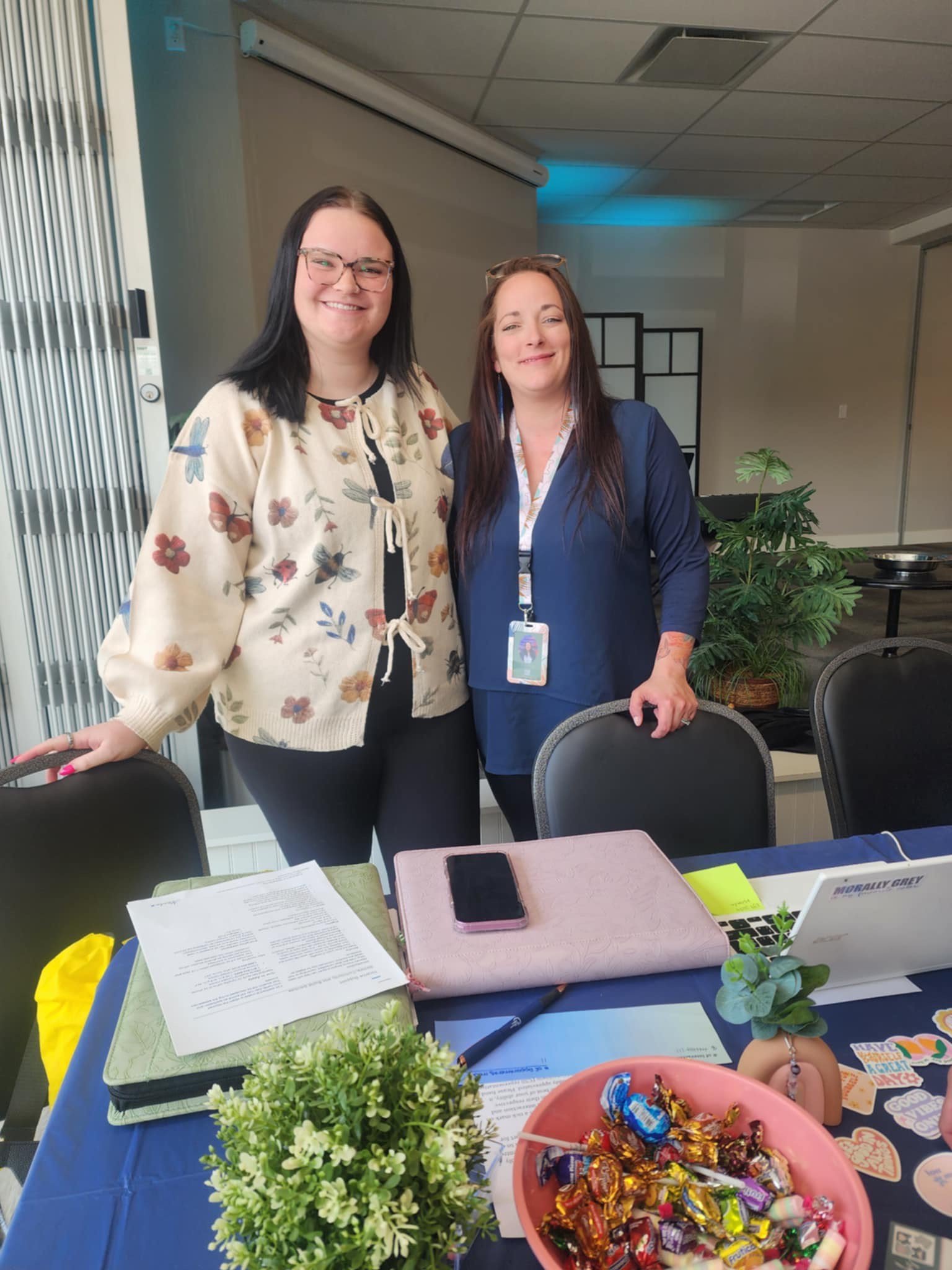
Meet Our Team

Jessi Hanks, Co-Founder and Co–Executive Director
Jessi has been involved with the organization since its formation in 2021 and has played a key role in shaping its community-based, justice-informed approach from the outset.
Jessi is a Certified Anger Management Specialist registered with the National Anger Management Association and has worked in the social services field for several years. Her professional experience spans frontline and leadership roles in shelter services, community outreach, and criminal justice system navigation, with a strong focus on practical, client-centred support.
Jessi acts as a strong advocate for improving outcomes for individuals involved in the criminal justice system by supporting access to treatment, housing, income supports, and community-based services that promote stability and rehabilitation. Her work also includes advocacy within legal and justice systems, with the goal of reducing recidivism and addressing the underlying factors that contribute to justice involvement.
Born and raised in Wetaskiwin, Jessi brings deep local knowledge and long-standing community relationships to her role. Her leadership is grounded in a strong commitment to the well-being of the community and an understanding of the unique needs and service gaps present in rural settings. Through her experience and dedication, Jessi contributes specialized, locally informed leadership to carapace’s work.
Contact Jessi
780-360-7657

Kaitlyn Knox, RSW, BSW, Co-Executive Director
Kaitlyn Knox is one of carapace Community Response’s Co-Executive Directors, who brings extensive experience in rural justice and community-based service delivery across Alberta. She has worked in justice and social services since 2018, supporting individuals experiencing intersecting challenges related to criminal justice involvement, homelessness, substance use, and mental health.
Kaitlyn holds a Bachelor of Social Work from MacEwan University and is currently pursuing a Master of Social Work at the University of Calgary, specializing in Clinical Social Work Practice with a focus on trauma-informed practice. Her professional background includes program development, case management, systems navigation, and justice-informed service provision, with a particular emphasis on rural and underserved communities. Kaitlyn has worked closely with courts, probation, corrections, and community partners to develop responsive, client-centred supports that address both individual needs and systemic barriers.
As the Co-Executive Director of carapace, Kaitlyn provides organizational leadership, policy development, and strategic oversight while maintaining a strong grounding in frontline realities. Her work is guided by principles of accountability, social justice, and trauma-informed practice, with a focus on improving access to equitable services outside of urban centres.
Contact Kaitlyn
780-360-7657
OUR BOARD
Board Chair: Kimberley Shenton
Vice Chair: Kallie Graham
Treasurer: James Raworth
Secretary: Jenni Hobson
Director: David Paull, KC
Director: Hailey Wales
Director: Jordan Sharp, RSW, BSW
Director: Kirsten Wilhelm, RSW, BSW
Director: Ankit Banerjee
Board Contact: board@carapacewetaskiwin.com
Why a Co-Executive Director Model?
carapace Community Response operates under a Co–Executive Director model as a deliberate and values-driven leadership choice. This model reflects the organization’s commitment to shared accountability, sustainability, and leadership that is grounded in both strategic oversight and frontline realities.
The complexity of carapace’s work requires diverse skill sets and perspectives at the executive level. A co-leadership structure allows the organization to balance community-based, relational work with governance, policy development, and systems advocacy, without placing the full weight of executive responsibility on a single role.
This model also supports continuity and resilience in a small, rural nonprofit context, where leadership burnout and capacity strain are significant risks. By sharing executive responsibilities, carapace is better positioned to respond to community needs, maintain ethical and trauma-informed decision-making, and ensure organizational stability over time.
Importantly, the Co–Executive Director model aligns with carapace’s core belief that effective responses to social and justice-related issues are collaborative rather than hierarchical. Just as the organization works alongside community members and partners, its leadership structure reflects shared power, mutual accountability, and respect for complementary expertise.